April 11th, 2026 — Eufy: 99.95kg. Sleep: Complicated. Exercise: Rest. Shoot: Done.
There is a specific kind of sleep that is neither restful nor wasted — the kind where you are technically horizontal for nine hours but consciously aware of about six of them. Last night was that kind. I switched to the cpap full face mask for the first time, after several nights of the nasal pillows pressing uncomfortably on the bridge of my nose. The logic was sound. The execution was not.
The Mask: A New Problem for Every Problem Solved
The nasal pillow cushions had been doing well in terms of compliance. The seal was good, the AHI figures were dropping, and seven of the previous ten nights had seen meaningful improvements in both duration and breathing quality. The problem was purely mechanical — the small pillows that produced the best seal were also creating a pressure point on my nose bridge that was impossible to ignore by morning.
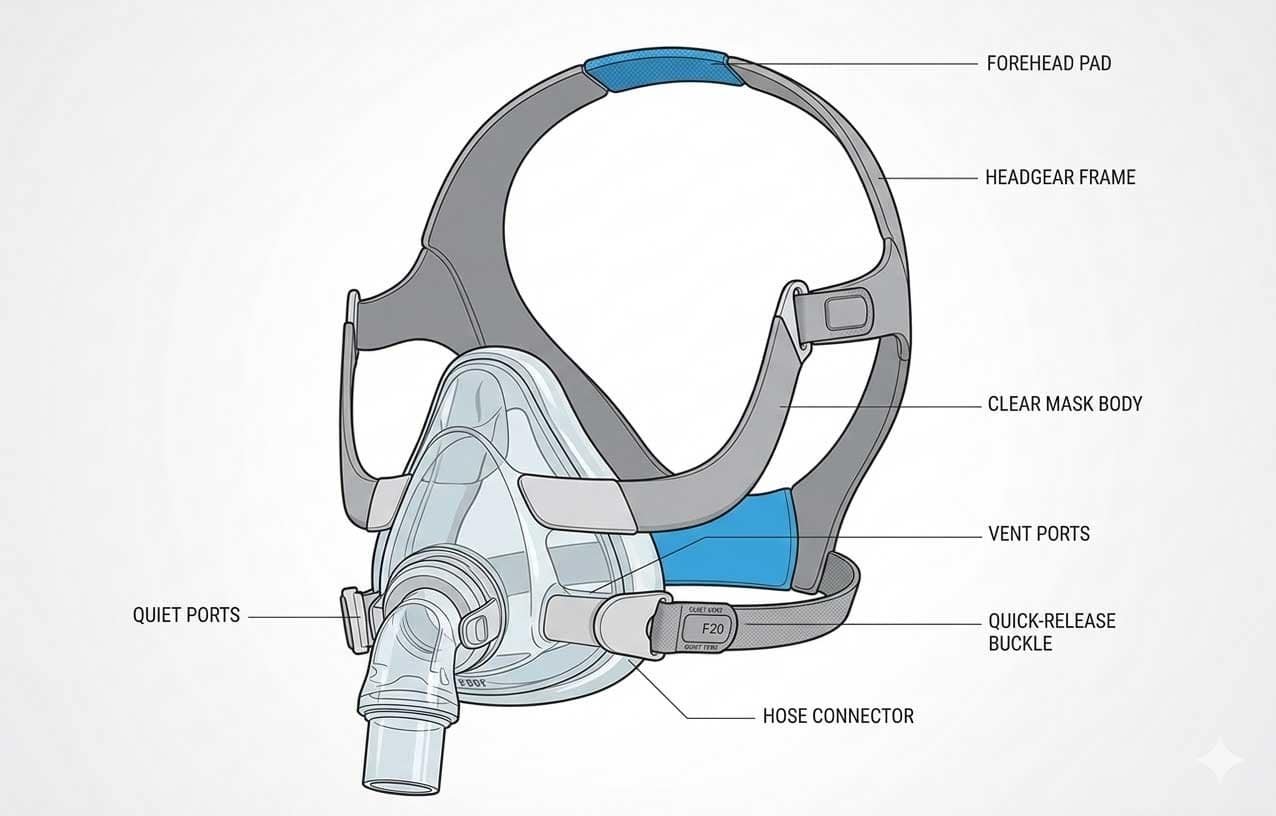
The full face mask was the obvious next step. It distributes contact across a wider surface area, avoids the nasal pillow insertion entirely, and should, in theory, be more comfortable to wear for longer stretches.
In practice, I took it off after approximately one hour.
Not because it was painful. Because it felt — there is no more precise word for this — wrong. The full mask covers both nose and mouth, and the sensation of breathing against resistance through a larger interface is genuinely different from the nasal pillow experience. I had not anticipated the psychological component: the mask felt more intrusive, not less, despite covering less of the nasal passage directly.
I fell back to sleep without it.
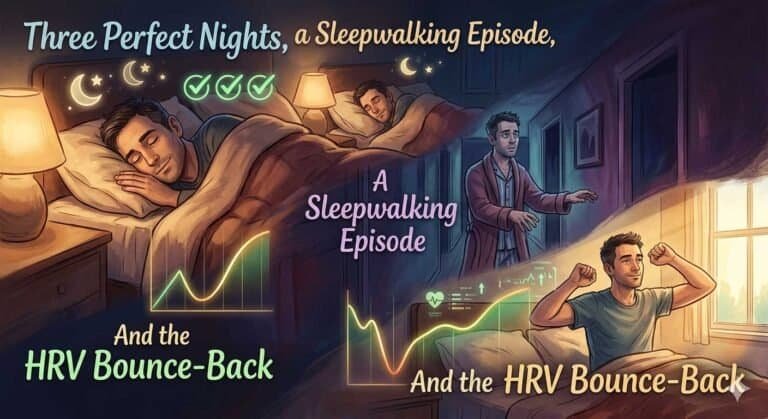
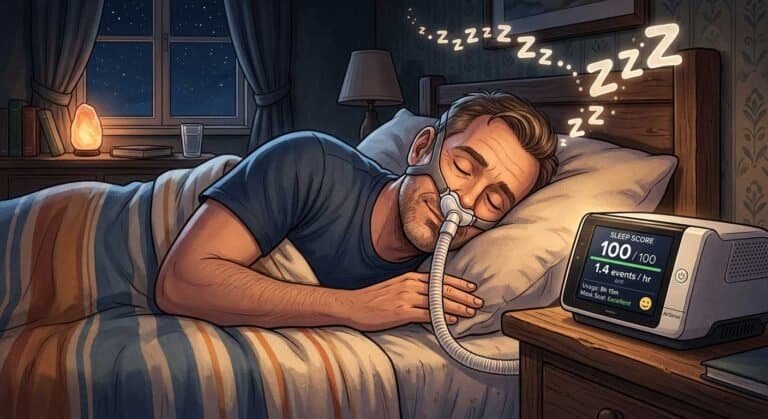
At six in the morning, I woke and found the mask had been off for several hours. I put it back on. I managed another two and a half hours before the alarm at eight-thirty. Total CPAP usage for the night: approximately three and a half hours — split, interrupted, and nowhere near the eight-hour sessions that had been appearing mid-week last week.
What the Fitbit Thinks Happened
The Fitbit takes a more generous view of the night than I do.
| Metric | Value |
|---|---|
| Total sleep recorded | 8h 41m |
| Sleep score | 88 (Good) |
| Sleep window | 23:33 – 09:13 |
| Time awake | 59 min |
| REM sleep | 2h 36m |
| Light sleep | 4h 46m |
| Deep sleep | 1h 18m |
An 88 sleep score and nearly nine hours recorded is superficially excellent. The catch, as regular readers of this series will recognise, is that the Fitbit is measuring time-asleep across the full window — it does not know whether the CPAP was on or off during any of those hours. The 59 minutes recorded as awake is almost certainly an undercount, given the time spent conscious with the mask off.
The REM figure of 2h 36m is genuinely solid, and the deep sleep at 1h 18m is the highest recorded in the series. It is possible that the hours without the mask, frustrating as they were, allowed the jaw to relax in a way the restricted mask interface does not. It is also possible I am retrospectively constructing a positive narrative from a disrupted night. The honest answer is: both things might be true.
The Body Composition Numbers
This morning’s Eufy scan is the first since 9 April, given yesterday’s missed weigh-in.
| Metric | Value | Rating |
|---|---|---|
| Weight | 99.95 kg | High |
| BMI | 27.9 | High |
| Body fat % | 30.5% | Extremely High |
| Body fat mass | 30.40 kg | Extremely High |
| Lean body mass | 69.50 kg | Low |
| Visceral fat | 15 | High |
| BMR | 1,728 kcal | Low |
| Water | 49.5% | Low |
| Protein | 12.5% | Low |
| Subcutaneous fat | 26.9% | High |
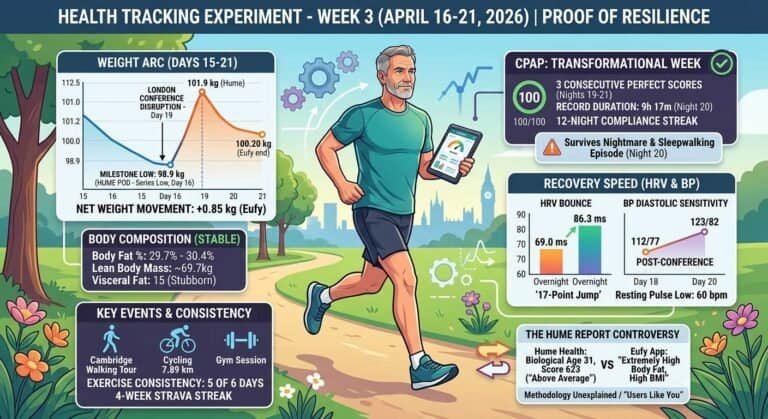
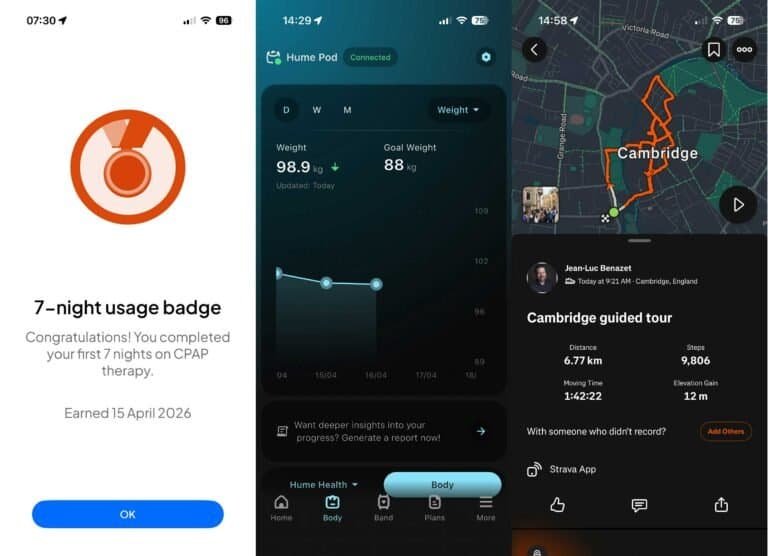
Weight is holding at 99.95 kg — unchanged from the last Eufy reading two days ago. There is no dramatic movement in either direction, which after a rest day, a missed weigh-in day, and a social afternoon involving food, is neither surprising nor discouraging. The direction of travel over eleven days remains clearly downward: from 102 kg on Day 1 to 99.95 kg today. That is two kilograms in eleven days, achieved without heroic intervention — just consistent fasting windows, reduced alcohol, and regular exercise on the days the knees allowed it.
The body fat percentage ticking up slightly from 30.2% to 30.5% between readings is within normal daily variance and not a trend I am reading anything into yet.
The Hume Band: Recovery Still the Priority
The Hume Band this morning shows HRV at 83.7 ms — which continues the upward trend that has been one of the quieter encouraging signals of this series. Stress level at 16.6 is low. SpO₂ sits at 95–98%, consistent with recent nights. Body temperature range of 35.5–37.0°C is stable.
The recovery and strain figures from yesterday afternoon are worth noting in context: after the second consecutive rest day, Recovery had dropped to 52 and Strain was at 16, with Metabolic Capacity at 64. The Hume Band, in its fashion, was reading the cumulative effect of reduced activity rather than the intent behind it. A body that has stopped moving registers differently from a body that is deliberately recovering. Whether those two states produce identical data is a question the next active day will help answer.
The Fitbit’s Message
Fitbit, with its characteristic bluntness, has a banner pinned to this morning’s dashboard: “Recovery requires rest days. You’ve been working hard, but remember that overtraining can increase strain. Give your body a break so that you can train to your potential.”
This is now the third consecutive rest day. The message is becoming harder to take at face value when the reason for the rest days is a knee issue rather than overtraining. The knees are not sore because I pushed too hard — they are sore because they carry an accumulated structural burden that a fortnight of gym sessions has not yet had time to resolve. These are different things, and a fitness tracker does not know the difference.
I have heard the message, Fitbit. I am also managing the knees, not the algorithm.
The Shoot and the Saturday
Work ran from 10:45 until noon — a photography session, which means standing, moving, carrying equipment, and a moderate amount of walking that the step count will eventually reflect but that no tracker will characterise as exercise.
The rest of the day involves friends, food, and the kind of Saturday that does not lend itself to calorie logging. I am not logging it. One day of intentional looseness in eleven days of consistent effort is not a problem. What I am not doing is drinking heavily — the connection between alcohol, mask compliance, and AHI figures is too well established in this series to ignore for a social occasion.
Tonight: back to the nasal pillows. The full mask experiment will be revisited, but not until I have done more research into fit adjustments and have a conversation with the supplier about whether a different headgear configuration might make it more tolerable. Rome was not built in a night, and neither is CPAP compliance.
Day 11 Summary
| Metric | Value | Source |
|---|---|---|
| Weight | 99.95 kg | Eufy |
| Body fat % | 30.5% | Eufy |
| Lean body mass | 69.50 kg | Eufy |
| Visceral fat | 15 | Eufy |
| HRV | 83.7 ms | Hume Band |
| Stress | 16.6 | Hume Band |
| SpO₂ | 95–98% | Hume Band |
| Fitbit sleep | 8h 41m / Score 88 | Fitbit |
| CPAP usage | ~3.5 hrs (split) | Narrative |
| CPAP mask | Full face — abandoned | — |
| Steps (as of 14:53) | 2,996 | Fitbit |
| Exercise | Rest day | — |
| Alcohol | Minimal | — |
Eleven days. Two kilograms down. One mask problem exchanged for another. The nasal pillows go back on tonight.
— Day 11 of 30