
DAY 12 — “One Bottle of Red. The Data Doesn’t Lie.”
April 12th, 2026 — Eufy: 100.90kg. Blood pressure: 134/94. CPAP: 100/100. Regrets: selective.
The alcohol effect on blood pressure is one of those things you know intellectually and occasionally choose to know less well on a Saturday evening with good friends, a generous cheeseboard, and a bottle of red wine that turned out to be entirely yours. This morning the data has a few things to say about that decision, and in the spirit of this experiment, I am going to let it say them.
The Bill Arrives
Let us start with the numbers, because they are instructive.
| Metric | Value | Rating |
|---|---|---|
| Weight | 100.90 kg | High |
| BMI | 28.2 | High |
| Body fat % | 30.7% | Extremely High |
| Body fat mass | 30.90 kg | Extremely High |
| Lean body mass | 70.00 kg | Low |
| Visceral fat | 16 | Extremely High |
| BMR | 1,742 kcal | Low |
| Water | 49.4% | Low |
| Protein | 12.4% | Low |
| Subcutaneous fat | 27.1% | High |
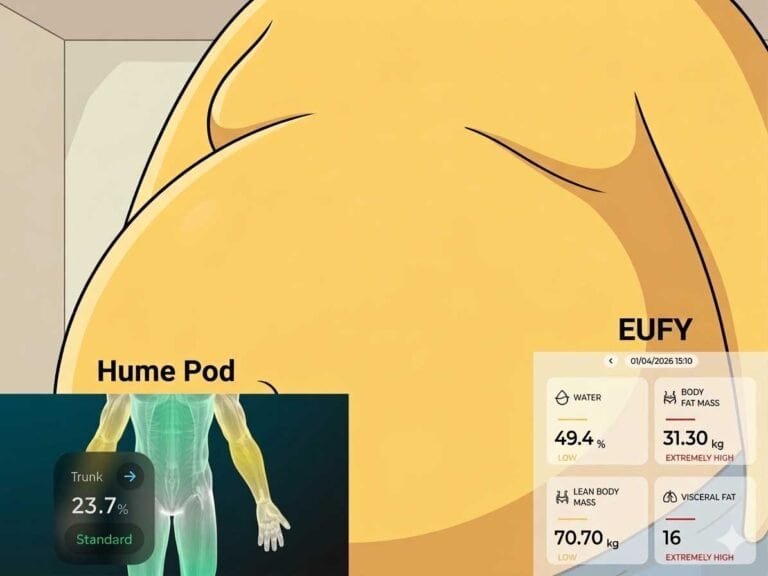
One kilogram gained overnight. Visceral fat back to 16 — the figure it was sitting at before ten days of discipline knocked it down to 15. Body fat percentage up from 30.5% to 30.7%. BMR has actually ticked up slightly to 1,742 kcal, which is presumably the body registering the additional caloric load.
None of this is surprising. A bottle of red wine, a substantial amount of cheese, cured meats, bread, and dessert is not a dietary neutral event. What is worth noting is that this is the first significant deviation from the plan in twelve days — and the data reflects exactly one significant deviation, not a pattern.
The weight will come back down. The visceral fat number is inflammatory in both senses of the word — food and alcohol together produce a measurable and temporary increase in visceral fat readings on bioimpedance scales, partly from the food volume itself, partly from water retention, and partly from genuine inflammatory response. By Day 14 this should have cleared, assuming the fasting window is maintained today and tomorrow.
The Blood Pressure Reading
134/94 mmHg — 60 bpm.
This is the highest blood pressure reading of the series, and it deserves to be named plainly. For context:
| Day | Blood pressure | Resting HR |
|---|---|---|
| Day 6 | 117/78 | 96 bpm |
| Day 7 | 104/72 | 96 bpm |
| Day 8 | 117/74 | 75 bpm |
| Day 9 | 115/73 | 70 bpm |
| Day 12 | 134/94 | 60 bpm |
The systolic reading of 134 puts it into the elevated-to-high range. The diastolic figure of 94 is the more concerning number — anything above 90 is classified as Stage 1 hypertension by most clinical guidelines. This is, by any reasonable interpretation, the alcohol talking.
The resting heart rate, interestingly, is the lowest of the series at 60 bpm. This is a known paradox of alcohol consumption: it suppresses heart rate in the short term via central nervous system depression while simultaneously raising blood pressure through vascular effects. The heart is beating more slowly, but it is working harder against greater resistance in the vessels.
I will take another reading this evening and again tomorrow morning. My expectation is that it will normalise within 24–48 hours as the alcohol clears and the inflammatory response settles. If it does not, that becomes a more significant data point.
The CPAP: The Unlikely Hero of Day 12
Here is the thing that makes this morning complicated in the most genuinely interesting way: despite the wine, the late night, and the difficult mask experience of the previous evening, last night’s CPAP recorded a perfect score of 100.
| Metric | Value |
|---|---|
| Score | 100 / 100 |
| Usage | 7 hours 25 minutes |
| Mask seal | Good |
| Events per hour | 2.9 |
| Mask off | 2 |
I used the full face mask again — the same mask I abandoned after an hour on Night 10. Something was different last night. Whether it was the wine reducing the psychological resistance to the interface, the fact that I went to bed later and was therefore more deeply tired, or simply that the body adjusts to new equipment faster than one expects — I kept it on for over seven hours and the mask scored the session perfectly.
This is significant for two reasons. First, a full bottle of red wine is precisely the kind of metabolic burden that tends to worsen sleep apnea — alcohol relaxes the upper airway musculature, which is exactly what apnea does not need. The fact that the AHI stayed at 2.9 events per hour (well within the therapeutic range) suggests the CPAP pressure was doing exactly the job it is designed to do, compensating for what the alcohol would otherwise have caused.
Second: the full face mask, despite the previous night’s failure, may actually be working. Night 11 was an equipment adjustment problem as much as a compliance problem. Last night suggests there is a viable path forward with this configuration.
The Fitbit, for its part, recorded 8h 19m of sleep with a score of 87 — solid on paper, though the timeline of 01:23 to 09:59 reflects a late night and an even later morning. Awake time of just 16 minutes is remarkably low given the circumstances, which again likely reflects the sedative effect of the wine rather than genuinely restorative sleep architecture.
The Hume Band: Recovery Collapsed
The Hume Band is not sympathetic.
Recovery score: 8. Strain: 27. Metabolic Capacity: 30 (estimated — baseline still not found). Metabolic Momentum: 4, stable.
A recovery score of 8 is essentially the floor. For context, the best reading of the series so far was 72 on Day 8 — a morning after good sleep following a day of significant but managed exercise. The Hume Band measures physiological readiness, and physiological readiness after a bottle of wine and a calorie surplus is, apparently, 8. This is not a judgement. It is a measurement.
The HRV figure from the Hume Band remains a more nuanced signal to watch over the coming days — it tends to lag the acute alcohol effect by 24 to 48 hours, meaning tomorrow’s reading may tell a more complete story about what last night actually cost.
The Peloton Question
Since we are being honest about everything else: I am seriously considering buying a Peloton bike.
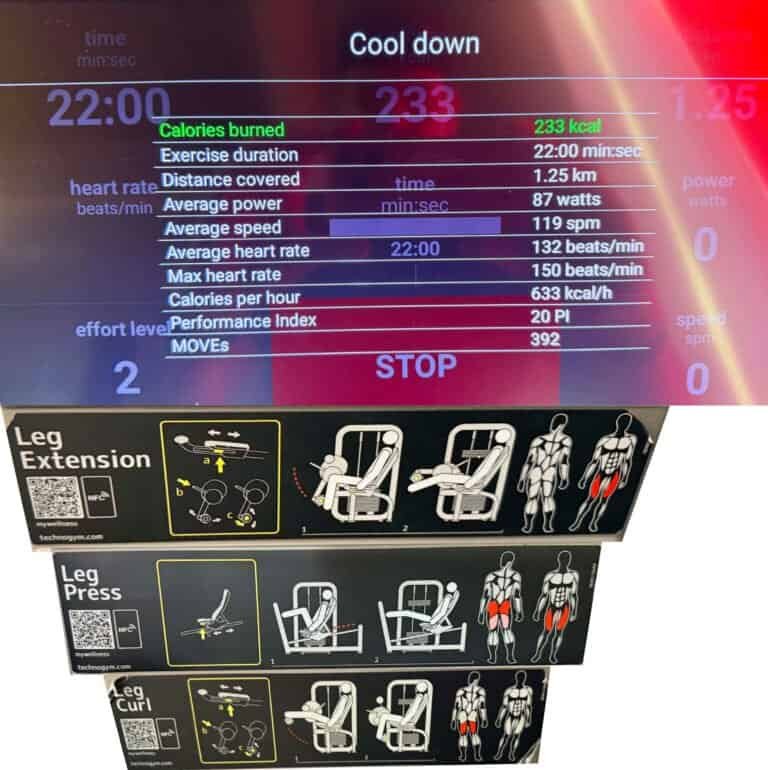
The context is the knees. Three consecutive rest days in a row — Days 9, 10, and 11 — have underlined the fundamental tension in this experiment: I respond well to daily cardiovascular exercise, the data confirms it, but the specific loading pattern of gym sessions and outdoor cycling is creating joint stress that is forcing involuntary rest days. The net effect is a stop-start pattern that neither builds fitness consistently nor gives the knees a structured recovery protocol.
A Peloton solves several of these problems simultaneously. Indoor cycling is low-impact — it loads the quadriceps and cardiovascular system without the pavement shock of outdoor riding or the knee-extension loading of the leg press. The structured class format removes the decision fatigue of designing a daily workout. And given that I already know I respond to cycling — I previously reached 90kg through sustained daily riding — the modality is not a guess.
It is also, I should note, an expensive solution to a problem that could theoretically be solved by adjusting gym programming. I am thinking about it. The data will inform the decision.
The Honest Accounting
One bottle of wine in twelve days. One social afternoon that went exactly as social afternoons do. The scale went up one kilogram; the visceral fat went back to where it was; the blood pressure spiked. All of that is real and all of it is recorded here, because that is what this experiment is for.
What is also true: the fasting window is closed today, hydration is a priority, and tomorrow morning’s numbers will be more instructive than this morning’s. The CPAP worked perfectly despite every reason it might not have. And twelve days in, the overall direction — weight, sleep quality, cardiovascular fitness — remains where it should be.
One Saturday does not undo eleven days. It just adds an honest entry to the log.
Day 12 Summary
| Metric | Value | Source |
|---|---|---|
| Weight | 100.90 kg | Eufy |
| Body fat % | 30.7% | Eufy |
| Visceral fat | 16 | Eufy |
| Lean body mass | 70.00 kg | Eufy |
| Blood pressure | 134/94 — 60 bpm | Manual |
| CPAP score | 100 / 100 | ResMed |
| CPAP usage | 7h 25m | ResMed |
| Events/hr | 2.9 | ResMed |
| Fitbit sleep | 8h 19m / Score 87 | Fitbit |
| Hume Recovery | 8 | Hume Band |
| Hume Strain | 27 | Hume Band |
| Exercise | Rest day | — |
| Alcohol | One bottle of red wine | Honest |
Twelve days. One kilogram up. Blood pressure noted. CPAP: perfect score anyway.
The data does not have feelings about your Saturday. That is, in its way, a comfort.
— Day 12 of 30