DAY 13 — High Blood Pressure & Late Nights – 30-Day Health Experiment
Monday 13 April 2026
Day 13. Lucky for some, they say. Today the data reflects something I already knew walking into it: the experiment wobbled last night. Late to bed, alcohol involved, knee still tender enough to rule out the gym, and — to add insult to data — the Hume Band ran out of charge sometime during the night, leaving a blank where the HRV, sleep quality, strain, recovery, and stress readings would normally sit. The late nights have been challenging, contributing to my concerns about high blood pressure late nights.
This is what real-world health tracking looks like. Not every day is a score of 100.
Today’s Data at a Glance
| Metric | Value | Source | Status |
|---|---|---|---|
| Weight | 101.10 kg | Eufy Scale | High |
| Body Fat % | 30.8% | Eufy Scale | Extremely High |
| BMI | 28.3 | Eufy Scale | High |
| BMR | 1,745 kcal | Eufy Scale | Low |
| Body Fat Mass | 31.10 kg | Eufy Scale | Extremely High |
| Lean Body Mass | 70.00 kg | Eufy Scale | Low |
| Visceral Fat | 16 | Eufy Scale | Extremely High |
| Subcutaneous Fat | 27.2% | Eufy Scale | High |
| Body Water | 49.3% | Eufy Scale | Low |
| Protein | 12.4% | Eufy Scale | Low |
| Weight (Hume Pod) | 101.2 kg | Hume Scale | High |
| Body Fat % (Hume Pod) | 25.6% | Hume Scale | Standard |
| Lean Mass (Hume Pod) | 70.9 kg | Hume Scale | Standard |
| BMR (Hume Pod) | 1,941 kcal | Hume Scale | High |
| Metabolic Age | 51 yrs | Hume Scale | Standard |
| Resting HR | 77 BPM | Hume Scale | Standard |
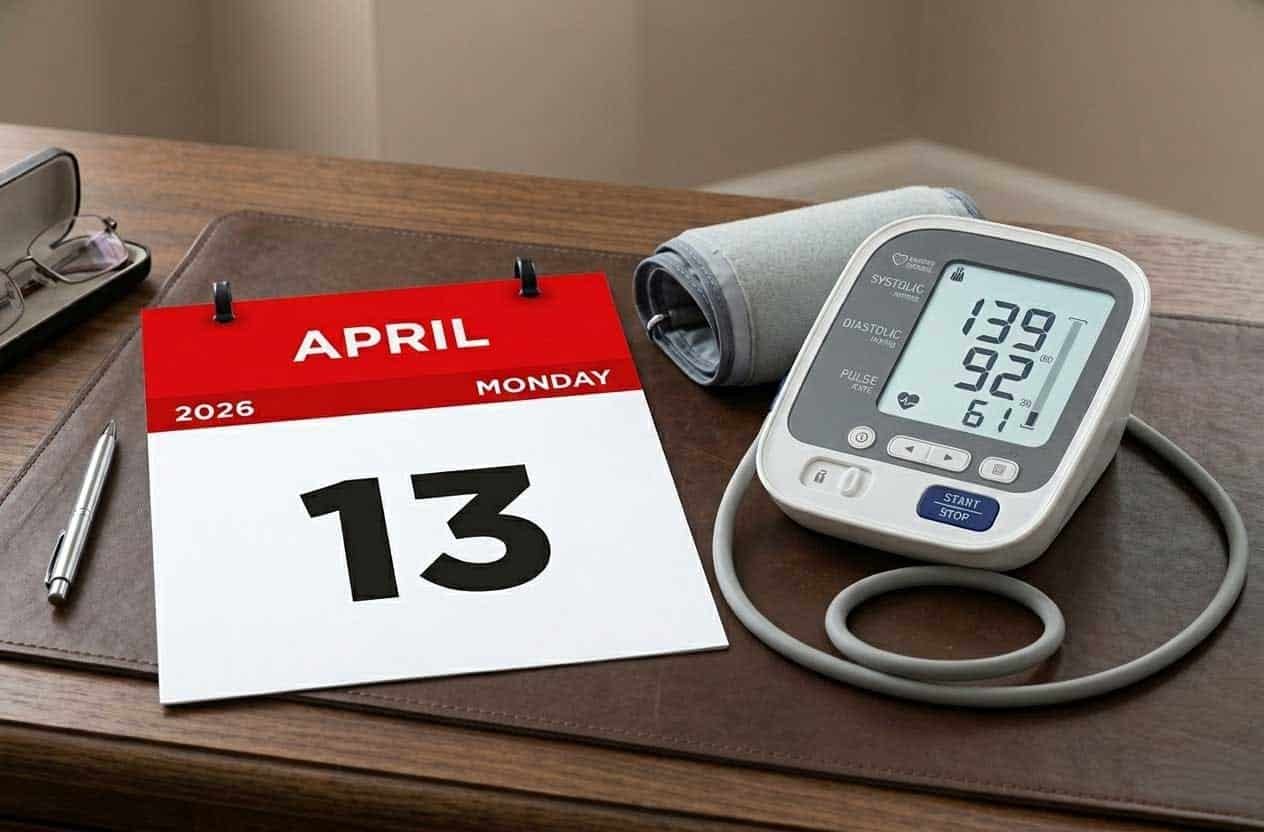
| Blood Pressure (avg) | 139/92 mmHg | Manual | HIGH |
| HR (BP reading) | ~61 BPM | Manual | Standard |
| HRV | No data | Hume Band | Battery dead |
| Stress Level | No data | Hume Band | Battery dead |
| SpO₂ | No data | Hume Band | Battery dead |
| Recovery Score | No data | Hume Band | Battery dead |
| Strain | No data | Hume Band | Battery dead |
| Metabolic Capacity | No data | Hume Band | Battery dead |
| CPAP Usage | 04:49 | CPAP App | — |
| CPAP Score | 78 | CPAP App | Good |
| AHI (Events/hr) | 3.5 | CPAP App | Normal |
| Mask Seal | Good | CPAP App | — |
| Mask Off Events | 1 | CPAP App | — |
| Sleep Duration | 5h 47m | Fitbit | Below goal |
| Sleep Score | 83 | Fitbit | Good |
| Sleep Window | 02:45–08:57 | Fitbit | Late |
| REM Sleep | 1h 27m | Fitbit | — |
| Deep Sleep | 1h 14m | Fitbit | — |
| Light Sleep | 3h 5m | Fitbit | — |
| Steps | 2,996 | Fitbit | Partial day |
| Calories Burned | 1,633 kcal | Fitbit | Partial day |
| Activity (Strava) | Rest day | — | Knee tender |
Hume Band: A Blank Where the Data Should Be
The Hume Band ran out of battery during the night. It’s the first complete data loss for wearable biometrics since the experiment began, and it stings more than expected — not because the data would necessarily have been good, but because a late-night drinking session is precisely the kind of scenario where HRV, stress levels, and recovery scores tell the most instructive story.
What’s almost certainly true, based on the pattern established across the first twelve days: HRV would have been suppressed, the stress score elevated, and recovery would have been in the red. Alcohol reliably disrupts all three. The band’s absence doesn’t erase what happened — it just means we’re working from inference rather than measurement today.
The band is now charged. It won’t happen again.
On the support front: I emailed Hume today to follow up on a contact they promised last week that never materialised. Good customer service matters when you’re relying on a device to track your health across thirty days. Waiting to hear back.
Sleep: Bed at 2:45am, Up Before 9
The Fitbit recorded 5 hours and 47 minutes of sleep — sleep window 02:45 to 08:57 — against a 7-hour target. Sleep score was 83 (Good), which is a testament to how efficiently the body consolidates sleep even in a truncated window, though it doesn’t tell the full story of what came before it.
The breakdown: 1h 27m REM, 1h 14m deep, 3h 5m light, 24 minutes awake. The deep sleep figure is respectable given the circumstances, but the REM is lower than the richer nights earlier in the experiment. Going to bed at 2:45am after alcohol doesn’t produce the same quality of recovery as being in bed by 11pm.
This is the latest bedtime recorded in the experiment. The schedule had been creeping — Sunday and Saturday both saw late finishes — but last night crossed into genuinely disruptive territory.
CPAP: Full Mask, Shorter Night
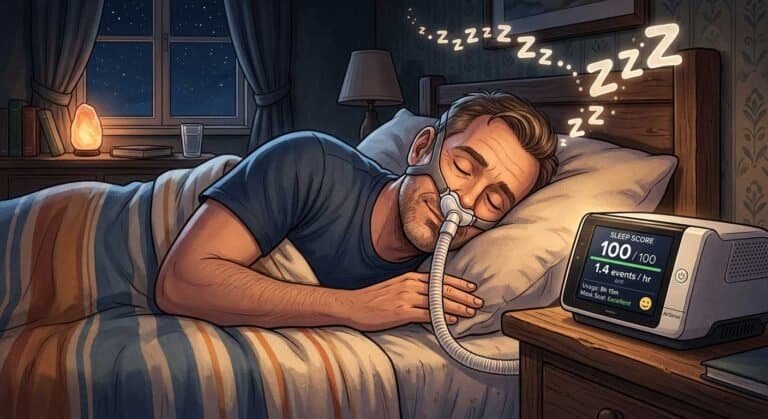
The CPAP was used — the full face mask again, continuing the switch made earlier in the experiment — but the session was notably shorter than recent nights: 4 hours and 49 minutes, compared to 7 and 8-hour sessions at the peak earlier this week. The score came in at 78, mask seal Good, AHI 3.5 events per hour, and one mask-off event.
The AHI of 3.5 is well within the clinically normal range (below 5.0), and the mask seal held well despite the shorter session. The shorter usage simply reflects what the sleep data confirms: there wasn’t much night left by the time the mask went on.
CPAP Compliance Trend — April 2026
| Day | Date | Usage | Score | AHI | Mask Off |
|---|---|---|---|---|---|
| Day 1 | Wed 1 Apr | ~0:30 | — | — | — |
| Day 2 | Thu 2 Apr | ~6:30 | — | — | — |
| Day 3 | Fri 3 Apr | ~4:20 | — | — | — |
| Day 4 | Sat 4 Apr | ~6:30 | — | — | — |
| Day 5 | Sun 5 Apr | ~8:10 | — | — | — |
| Day 6 | Mon 6 Apr | ~6:30 | — | — | — |
| Day 7 | Tue 7 Apr | ~6:20 | — | — | — |
| Day 8 | Wed 8 Apr | 08:19 | 100 | 2.1 | 2 |
| Day 10 | Fri 10 Apr | 04:50 | 78 | 5.1 | 2 |
| Day 11 | Sat 11 Apr | 07:25 | 100 | 2.9 | 2 |
| Day 12 | Sun 12 Apr | 04:49 | 78 | 3.5 | 1 |
| Day 13 | Mon 13 Apr | 04:49 | 78 | 3.5 | 1 |
The pattern is becoming clear: shorter, later nights produce 78-point scores; full, earlier nights produce perfect 100s. The mask is on — the compliance habit is holding — but the quality of the session is being dragged down by the time it starts, not by the mask itself.
Body Composition: Weight Climbs Again
The Eufy scale this morning recorded 101.10 kg. That’s up from 99.95 kg on Day 9 and Day 11, and represents the highest reading in the experiment to date. The Hume Pod scale confirmed it at 101.2 kg. A 1.1–1.2 kg increase from what had been a stable sub-100 kg window is not trivial.
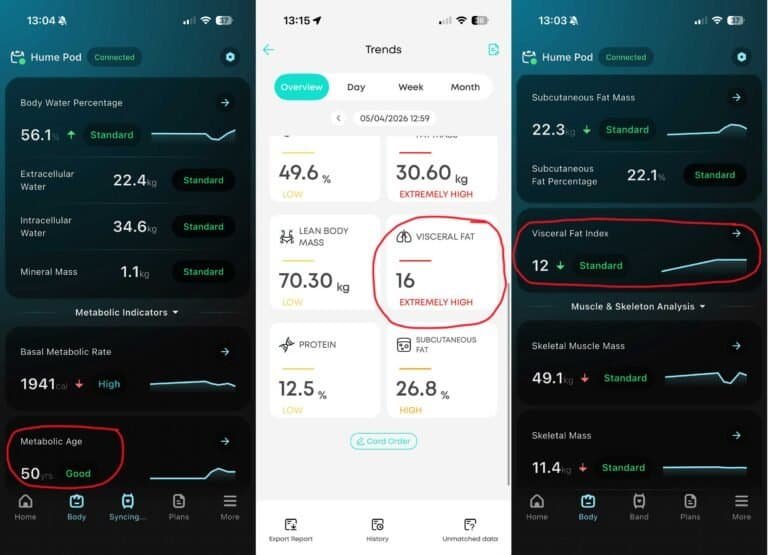
Some of this is almost certainly water retention from alcohol. Alcohol disrupts the body’s antidiuretic hormone, leading to paradoxical dehydration and subsequent fluid rebound — the Eufy’s water reading of 49.3% (flagged as Low) is consistent with that. Visceral fat climbed to 16 (Extremely High, up from 15 earlier in the experiment), which is the metric that matters most from a long-term health perspective.
The Hume Pod’s body fat reading of 25.6% sits notably lower than the Eufy’s 30.8% — this divergence between bioelectrical impedance devices is normal and a consistent feature of these readings throughout the experiment. The trend direction matters more than the absolute number, and both devices are pointing the same way this week.
Blood Pressure: The Reading That Demands Attention
Three readings taken this afternoon:
- 12:58 — 143/92, HR 63
- 13:01 — 135/94, HR 61
- 13:06 — 139/91, HR 60
- Average — ~139/92, HR ~61
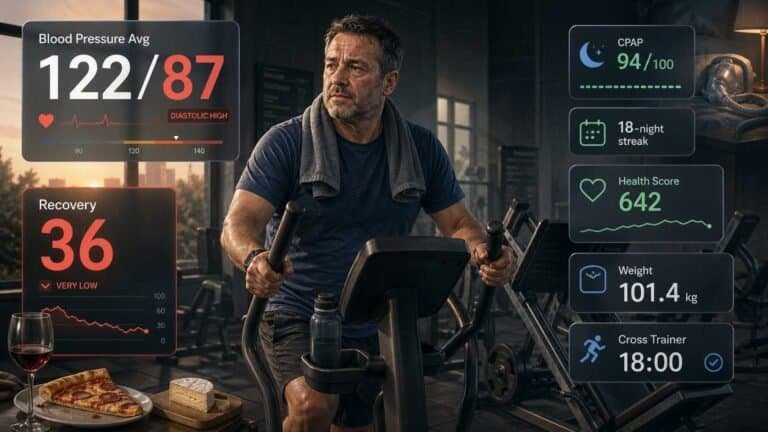
This is the first time blood pressure has been explicitly captured in the experiment, and the readings are elevated. Stage 1 hypertension is generally defined as systolic 130–139 or diastolic 80–89; all three readings today fall in that range or above. The diastolic readings of 91–94 are particularly notable.
It’s worth stating clearly: blood pressure readings after a late, alcohol-affected night are not necessarily representative of baseline. Alcohol acutely raises blood pressure, and readings taken the following afternoon may still reflect that. However, this isn’t a reason to dismiss the numbers — it’s a reason to track them consistently going forward and compare against readings taken under more controlled conditions.
The knee injury means there’s no exercise-induced reduction in BP today. That’s a compounding variable.
Activity: Rest Day (Knee)
No Strava activity. The left knee remains tender enough to rule out the gym or cycling. Fitbit recorded 2,996 steps and 1,633 kcal at the point of capture — a low-activity day by any measure. Fitbit’s own prompt noted: “Recovery requires rest days” — which is true, though in this case the rest is injury-enforced rather than strategically scheduled.
The tension between needing movement for cardiovascular and metabolic health and needing rest for the knee to recover is a real constraint in the experiment right now. Gentle walking has been the compromise.
Honest Accounting: What Day 13 Means
The experiment doesn’t demand perfection. It demands honesty. Day 13 is an honest data point: a social evening ran late, alcohol was involved, bed happened at 2:45am, the Hume Band ran flat, and weight has nudged upward. Blood pressure readings are elevated and deserve monitoring.
None of this erases the genuine progress made in the first twelve days. The CPAP habit is intact. The mask went on, even at 2:45am. The scale data, while higher, is one reading on one morning. The question is whether this is a blip or the beginning of a regression, and that’s answered by what Day 14 looks like.
The experiment continues.
Data captured 13 April 2026. Hume Band data unavailable due to battery failure. Fitbit steps/calories reflect partial day at time of capture (~14:53). Blood pressure readings taken in the afternoon and may reflect post-alcohol elevation rather than resting baseline. All readings are self-reported from consumer devices and should not be interpreted as clinical measurements.