
DAY 9 — “The Knees Have Spoken. Today I Listen.”
April 9th, 2026 — Weight: ~100.2kg. Blood pressure: 115/73 — 70 bpm. Rest day. No negotiation.
Yesterday I overdid it.
In my defence, it was a genuinely lovely day — warm, sunny, the kind of English April afternoon that arrives without warning and disappears just as quickly. After the gym, after 13,000 steps of walking, with the sun still out and the bike in the hallway, the decision to go for a 30km ride felt entirely reasonable. And in many ways it was. It was also the third significant physical demand placed on two knees that have been under structural pressure for years, on consecutive days, in the first full week back at the gym after a long absence.
The knees have now formally responded. This morning I did not get up early for the gym or a walk. I did not attempt to push through. I stayed in bed until a sensible hour and I am treating today as what it needs to be: a genuine rest day.
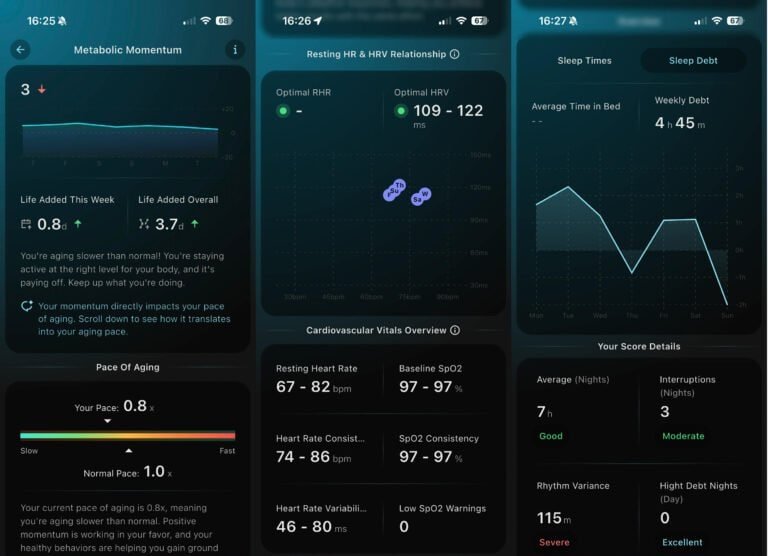
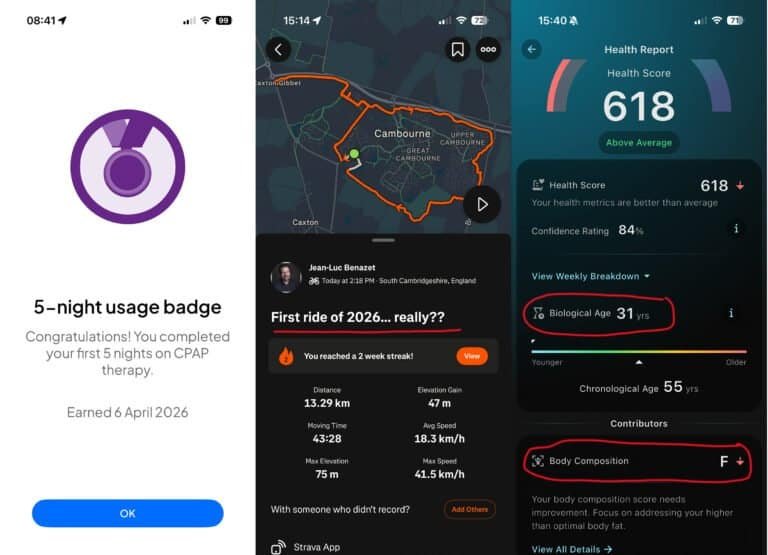
This is not laziness. This is the data — and both Fitbit and the Hume Band have been telling me for several days that recovery requires actual recovery, not just slightly less intense activity. The Fitbit’s recurring message of “Recovery requires rest days” has been easy to dismiss on mornings when I feel fine. On a morning when both knees are lodging complaints, it is rather more persuasive.
The Blood Pressure: The Best Resting Heart Rate of the Series
Best of three readings this morning: 115/73 mmHg — 70 bpm
This is quietly the most encouraging single number of Day 9. The blood pressure itself continues its improving trend: from 117/78 on Day 6, to 104/72 on Day 6’s afternoon reading, back to 117/74 on Day 8, and now 115/73 this morning. That is a broadly stable and healthy picture.
But the resting heart rate of 70 bpm is the headline. For context across the series:
| Day | Resting HR (blood pressure monitor) |
|---|---|
| Day 6 | 96 bpm (post-gym) |
| Day 7 | 96 bpm (post-bike) |
| Day 8 | 75 bpm |
| Day 9 | 70 bpm |
The downward trend in resting heart rate is one of the clearest physiological signals that cardiovascular fitness is improving. A lower resting heart rate means the heart is pumping more blood per beat — it is becoming more efficient. From above 90 bpm to 70 bpm in three days of measured readings is a meaningful shift, and it reflects the cumulative effect of regular aerobic exercise, improved sleep oxygenation, and reduced systemic stress.
A resting heart rate of 70 bpm for a 55-year-old man is entirely normal and healthy. The direction of travel suggests it may well go lower as the month continues.
The CPAP: A Better Night, A New Problem
Last night’s sleep was meaningfully better, and the reason was a simple equipment adjustment: I changed the nasal pillow cushion from medium to small. The seal improved immediately — less air leakage, better pressure delivery, quieter operation.
The catch: the small pillows are pressing on the bridge of my nose. Not painfully enough to stop me sleeping, but uncomfortably enough to notice. By morning the pressure point was making itself known.
This is the classic CPAP fitting problem — the seal that fits the mask often does not fit the face, and vice versa. The options are: adjust the headgear tension, try a different pillow size again, or consider switching back to the full face mask that covers the nose entirely rather than inserting into the nostrils.
The full mask has its own disadvantages — it is larger, warmer, and requires a tighter seal across the cheeks and forehead. But it distributes pressure differently and avoids the nasal bridge contact entirely. Given that the primary goal is keeping the mask on all night rather than optimising for comfort at the expense of compliance, whatever configuration produces the best sleep is the right one.
I will experiment tonight. The streak is now seven nights. I am not breaking it over a cushion size.
Yesterday’s Full Picture: What Day 8 Actually Was
The Day 8 article published yesterday captured the morning gym session but not the full day — because at the time of writing the afternoon had not yet happened. For the record, Day 8’s complete physical picture was:
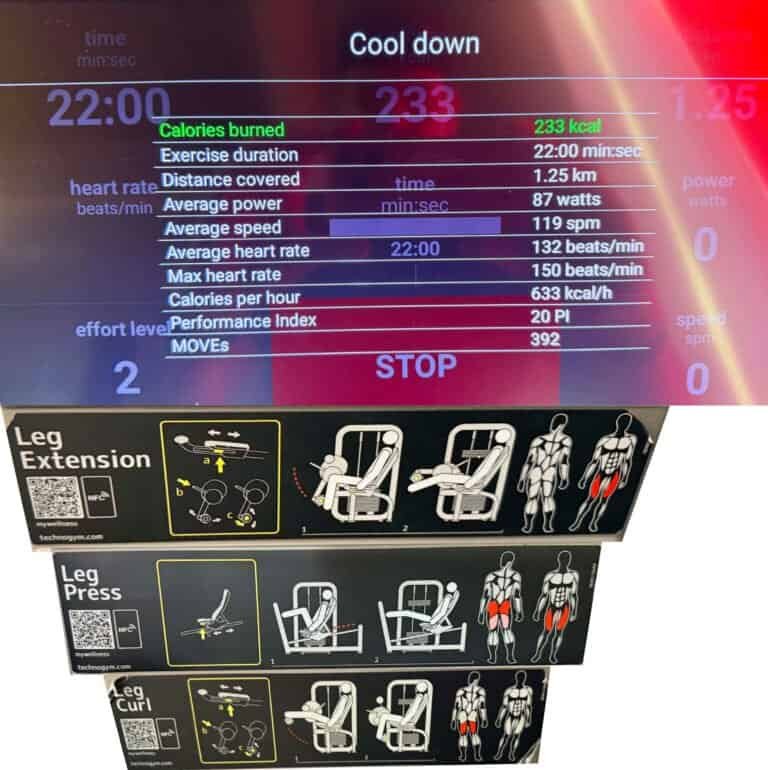
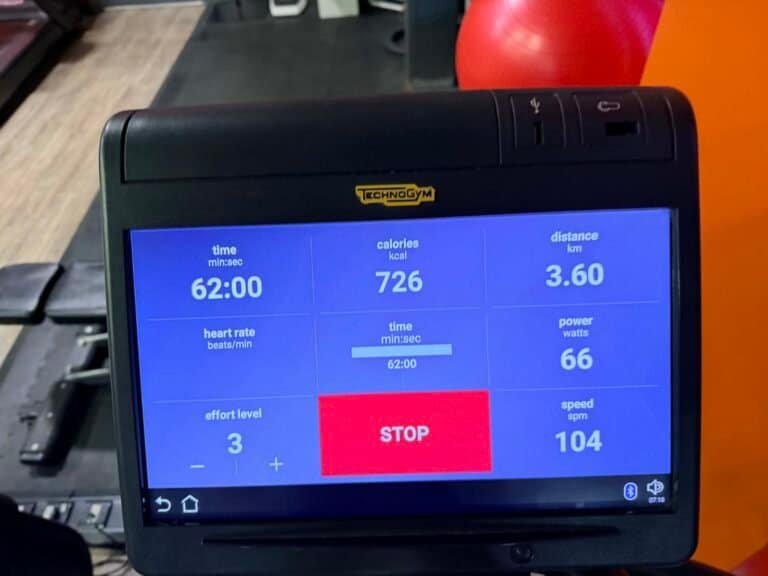
- 22-minute cross trainer session — 233 kcal, 132 bpm average
- Leg press, leg curl, leg extension weights — knee strengthening
- 13,000+ steps across the full day
- 30km outdoor bike ride — afternoon, warm weather, on an empty stomach
That is a genuinely substantial total load for a single day in Week 2 of a fitness restart, at 55, with two knees already under structural pressure. The Hume Band’s metabolic capacity screen and the Fitbit’s repeated “recovery requires rest days” message were both correct. Today is the rest day they were asking for.
The bike ride itself was the right instinct — getting on the bike on a sunny day is exactly the kind of spontaneous activity that makes exercise sustainable rather than punishing. The lesson is sequencing: a 30km ride the day after a gym session that already included leg work is a conversation the knees will always end on their own terms.
The Weight: Stubborn, Contextualised, Temporary
Weight this morning is roughly unchanged from yesterday — still in the 100.2 kg range. Cycling 30km on an empty stomach yesterday did not produce the immediate scale movement one might expect. There are two honest explanations for this.
First, the cycling itself — while burning significant calories — was followed by eating at the end of the day. The net deficit may be smaller than the exercise alone suggests.
Second, and more importantly: the late-meal mistake from Day 8 is still working its way through the system. Water retention from late eating typically takes 24–48 hours to fully clear. The scale number today reflects yesterday’s choices as much as today’s.
The direction will reassert itself when the fasting window is maintained consistently. Tonight: eating window closes at 8pm. The camera goes away before then.
Looking Ahead: What Week 2 Needs
Eight days in, the patterns are becoming clear enough to name directly.
What is working: CPAP compliance — seven consecutive nights and the apnea events per hour are dropping week on week. Exercise volume — the body is responding and the cardiovascular metrics confirm it. Alcohol reduction — significantly lower than baseline and the blood pressure reflects it.
What needs fixing: Intermittent fasting consistency — two window breaks in eight days, both caused by late photography sessions. Bedtime rhythm — 11pm target is being hit more often, but pre-sleep restlessness is still adding an hour before actual sleep. Recovery planning — yesterday proved that enthusiasm for exercise without sequencing consideration will produce exactly the knees-first-thing-in-the-morning experience I had today.
Week 2 primary targets:
- Zero fasting window breaks
- Consistent bedtime at or before 11pm
- No more than two consecutive high-intensity days
- Hume technical response — still outstanding, now ten days since first contact
Day 9 Summary
| Metric | Value | Direction |
|---|---|---|
| Weight | ~100.2 kg | ➡️ Holding |
| Blood pressure | 115/73 | ✅ Healthy |
| Resting HR | 70 bpm | ✅ Best of series |
| CPAP streak | 7 nights | ✅ |
| Mask adjustment | Small pillows | ⚠️ Nose bridge pain |
| Gym / Exercise | Rest day | ✅ Needed |
| Knees | Demanding rest | ⚠️ Respected |
| Fasting window | Maintained | ✅ |
| Alcohol | 0 | ✅ |
| Bed time | 11pm | ✅ |
Nine days. The streak holds. The knees are resting. The resting heart rate is 70 bpm.
Tonight: mask back on, cushion size to be determined, eating window closed at 8pm.
— Day 9 of 30