DAY 2 — “I Actually Showed Up. Now the Data Gets Interesting.”
April 2nd, 2026 — Weight: 101.4kg. Sleep: 6h 26m. Steps: 10,477. Gym: Done. Focus: sleep apnea and weight loss
I am going to say this plainly and without false modesty: I showed up.
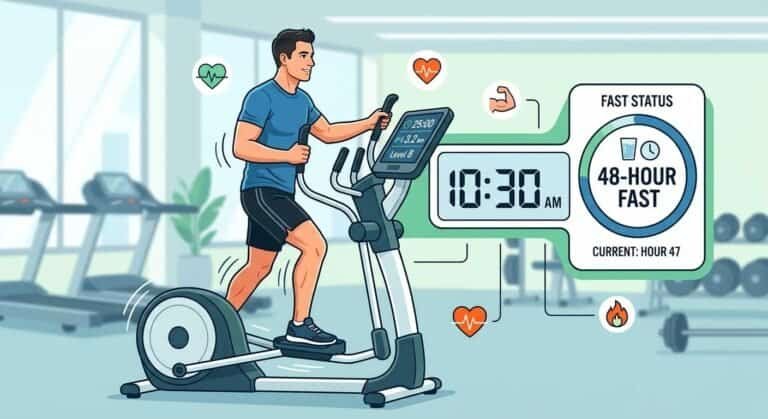
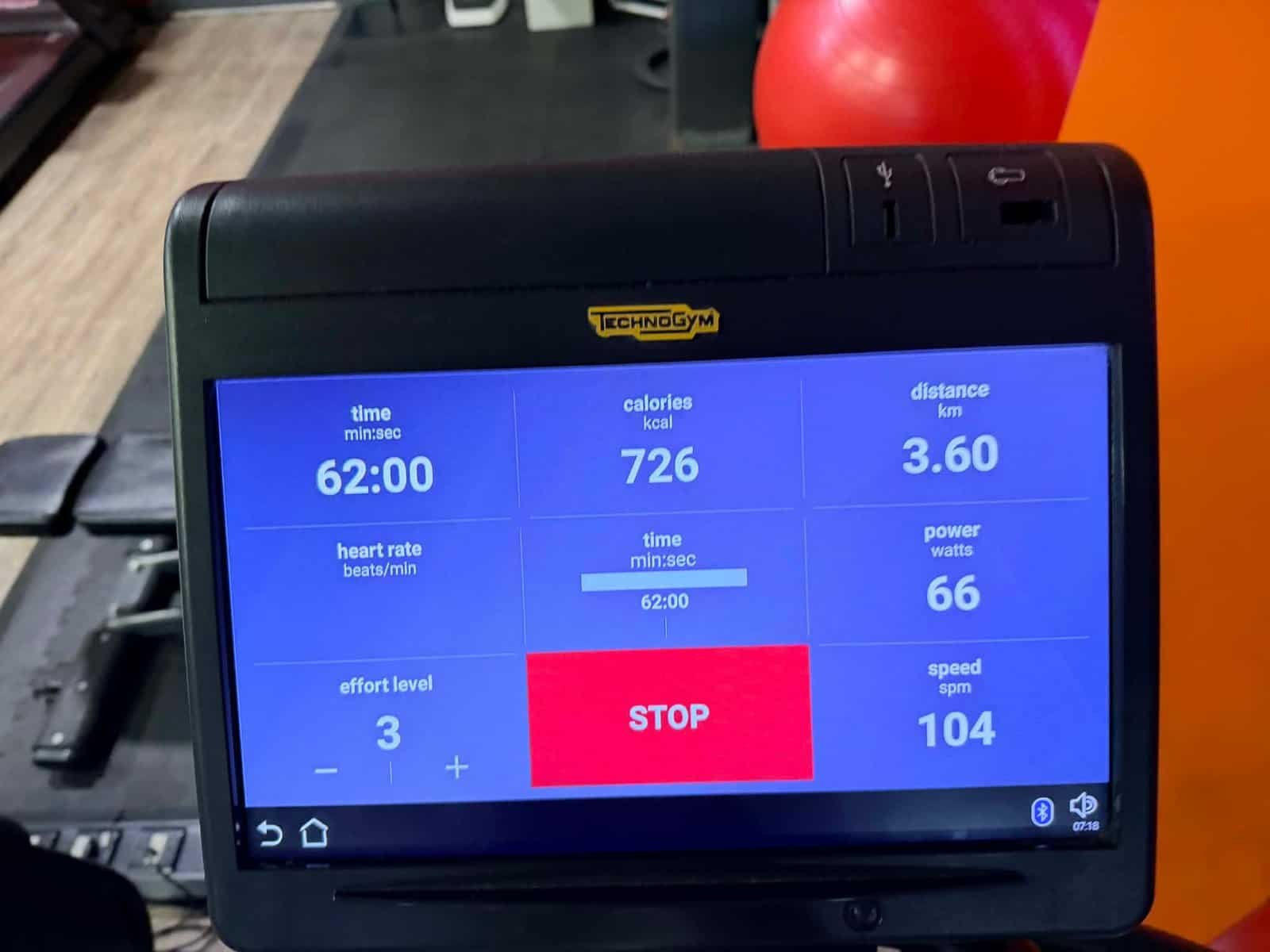
Yesterday I announced, publicly, that I would be in bed before 11pm and at the gym for 6am. I am a 55-year-old Frenchman and a self-confessed night owl, and announcements of this kind have historically had a shelf life of approximately one evening. But last night I was in bed at 10:48pm. This morning my alarm went off at 5:47am. By 6am I was on a cross trainer at the gym, and by 7:18am the TechnoGym screen was showing me a number that made me feel, briefly, like a functioning human being:
726 calories. 3.6km. 62 minutes. Heart rate: 162 bpm at the peak.
Effort level 3, which sounds modest until you remember that the person on the machine weighs 101.4 kilograms and hadn’t seen 6am voluntarily in quite some time.
And yes — 101.4 kilograms. Down from 102kg yesterday. That is 600 grams gone on Day 1. Mostly water, mostly the result of actually moving, partly the result of drinking more of the stuff than I usually do. I am not celebrating yet. But I am noting it.
The Numbers: A Device By Device Reckoning
This is where it gets interesting. Because I now have four devices all measuring the same body and the same night’s sleep — and they do not entirely agree with each other.
Weight:
- Eufy scales this morning: 101.4 kg ✅
Sleep — and this is where it gets complicated:
Fitbit Charge 5 said:
- Total sleep: 6 hours 26 minutes
- Sleep score: 80/100 — Good
- Asleep: 22:48 — Awake: 05:46
- Breakdown: Deep 58 min / Light 4h 12m / REM 1h 15m / Awake 32 min
Hume Band said:
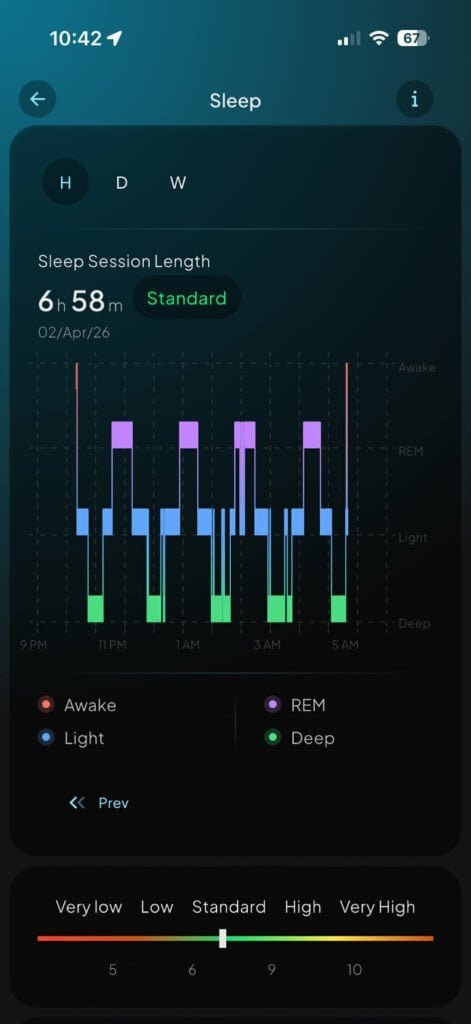
- Total sleep: 6 hours 58 minutes — Standard
- The sleep chart shows good cycling between Deep, Light and REM throughout the night
So Fitbit and the Hume Band disagree by 32 minutes on the same night. Both are measuring wrist movement and heart rate. One of them is wrong. This will be a recurring theme.
Steps — another disagreement:
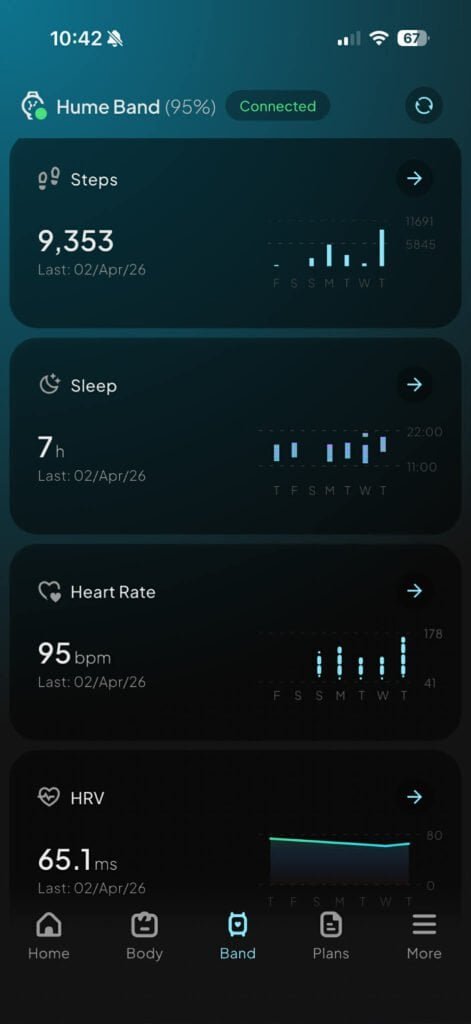
- Hume Band: 9,353 steps
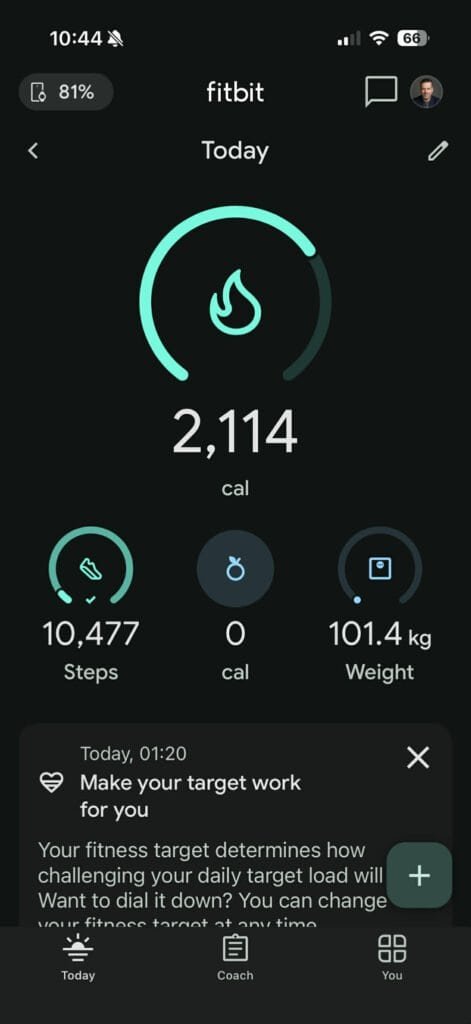
- Fitbit: 10,477 steps
Same wrist. Same day. A difference of 1,124 steps. When two devices can’t agree on something as simple as how many times my foot hit the floor, it raises a reasonable question about what the more complex metrics — body fat, metabolic capacity, recovery — are actually worth.
Decoding the Hume Band: What Does Any of This Mean?
Several of you have probably looked at Hume Band screenshots and thought: what on earth is Metabolic Momentum? I thought the same. Let me walk through what the app is telling me, and what I think it actually means.
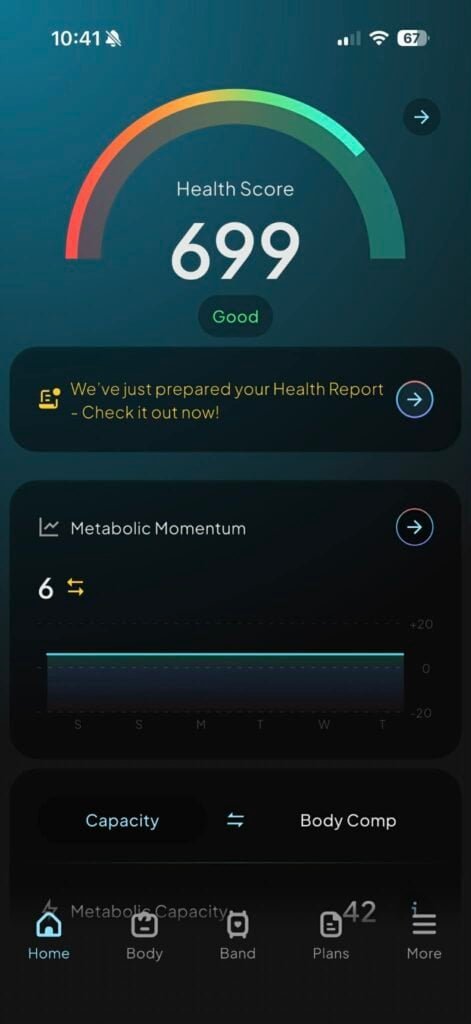
Health Score: 699 — “Good” Out of 1000, apparently. 699 puts me in the “Good” category according to Hume. Given that my visceral fat is extremely high and my blood oxygen dropped to 88% overnight, I am treating this score with the same scepticism I apply to the trunk fat being “Standard.” Still — better than “Poor.”
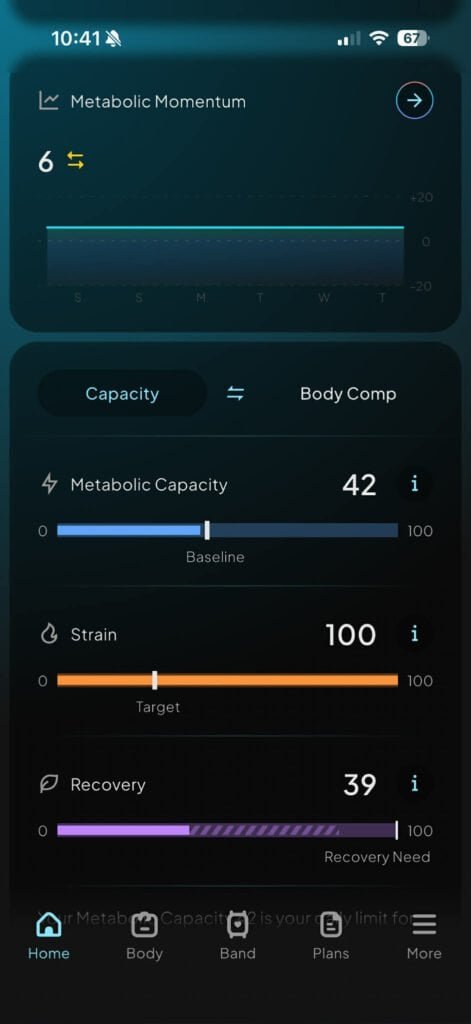
Metabolic Capacity: 42 This is Hume’s measure of your current energy availability — essentially how much your body has in the tank for physical activity. 42 out of 100, sitting at baseline. After a 62-minute gym session this morning, that is not surprising.
Strain: 100 Maximum. Hume is telling me I hit my target strain for the day. This one I actually believe — 726 calories on a cross trainer at 6am will do that.
Recovery: 39 This is the one to watch. Recovery of 39 means my body has not fully recovered from yesterday’s baseline — it needs rest and rebuilding. In practical terms: sleep more, eat enough protein, don’t go back to the gym tomorrow and destroy yourself.
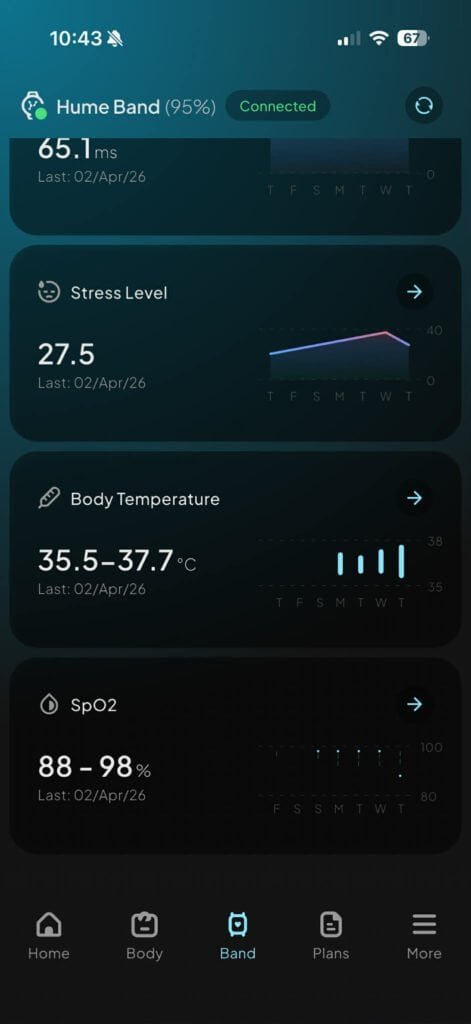
HRV: 65.1ms Heart Rate Variability — the variation between individual heartbeats. A higher HRV generally means your nervous system is recovering well. 65.1ms is actually decent for a 55-year-old man. The Fitbit doesn’t show me this number directly, which is one point in Hume’s favour.
Stress Level: 27.5 On a scale that appears to go to 40. Moderate. Considering I set an alarm for 5:45am and went to a gym, I’ll take it.
Body Temperature: 35.5–37.7°C A wide range, which reflects variation throughout the night. Normal range is 36.1–37.2°C at rest, so that upper figure is slightly elevated — possibly post-exercise inflammation, possibly just natural variation.
The Number I Cannot Ignore: SpO2 of 88% Overnight
Let me be precise about this, because the data deserves precision.
My Hume Band’s SpO2 readings today — from 4am to 11am, covering my waking hours and the gym session — show a perfectly healthy 95–98%. The app rates this “High,” meaning high quality. My blood oxygen when I am upright, moving, and breathing freely is exactly where it should be.
But overnight, during the hours I was asleep and without my CPAP mask, the reading dropped to 88%.
That gap — 95-98% awake, 88% asleep — is not a device quirk. That is sleep apnea doing precisely what sleep apnea does: interrupting breathing during sleep, starving the blood of oxygen, and forcing the body into a low-grade physiological crisis every single night. The moment I am conscious and breathing normally, the numbers recover. The moment I am unconscious and the airway relaxes and collapses — down it goes.
This is why I wake up exhausted. This is why my cortisol is chronically elevated. This is why visceral fat accumulates despite reasonable eating. Poor overnight oxygenation disrupts every single recovery and metabolic process that should be happening while you sleep.
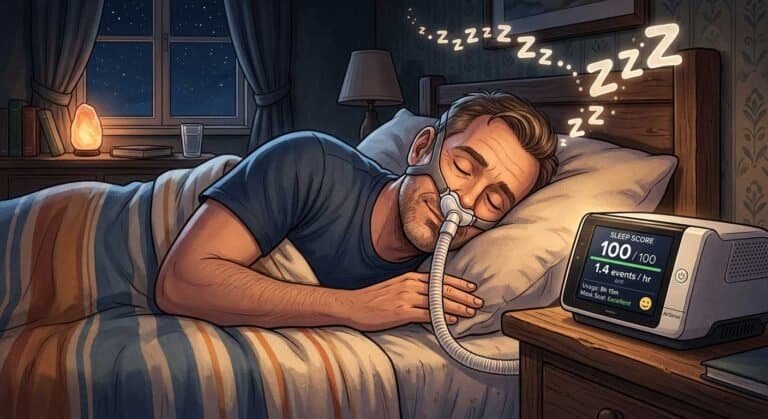
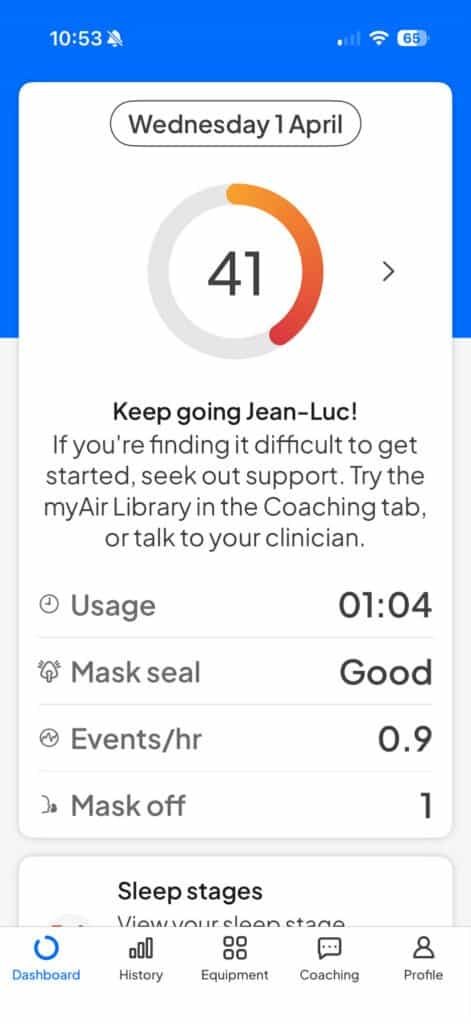
The CPAP data from last night showed 0.9 events per hour during the one hour and four minutes I wore the mask — near perfect. Then I took it off. And my blood oxygen told the rest of the story.
The mask works. I just need to keep it on my face.
Tonight’s target remains: two hours. Not the whole night. Just two hours of 95-98% instead of 88%.
The difference between those two numbers may be the most important data point in this entire 30-day experiment.
The Hume Pod Says My Legs Got Heavier
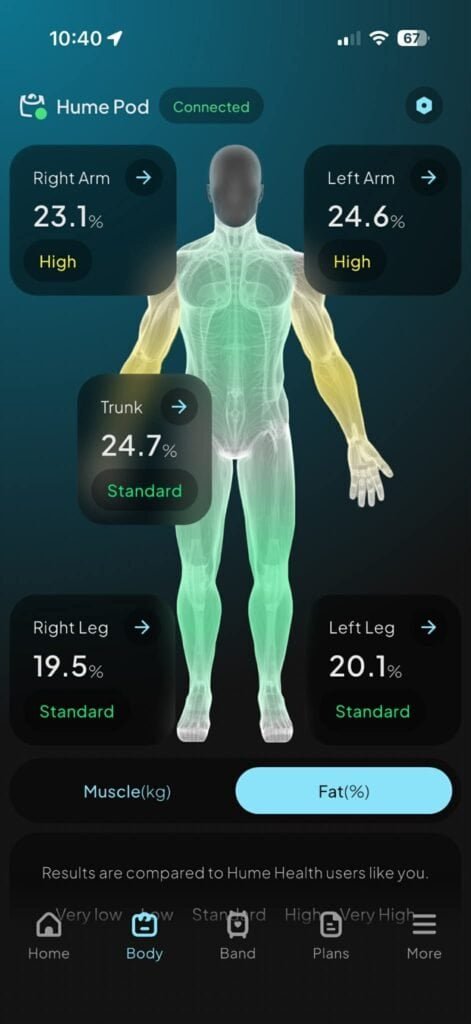
One more observation from today’s Hume Pod scan. Yesterday my legs were both 18.8% fat — “Standard.” Today:
- Right leg: 19.5% — Standard
- Left leg: 20.1% — Standard
Both went up slightly. My instinct — and this aligns with exercise physiology — is that this is post-exercise inflammation. When you work muscles hard, they retain water as part of the repair process. The legs did the work this morning. The Hume Pod is potentially picking that up as a temporary increase in localised mass. This is not fat gain. This is your body doing its job.
It does, however, raise another question about the Hume Pod’s measurement precision. If inflammation from a single gym session moves the needle, how stable is this data day to day? Something to watch.
What I Ate (And Didn’t)
Intermittent fasting 16/8 means my eating window opened at midday. Before that: water, black coffee, the gym. After midday: a proper lunch, real food, nothing processed. 1/3 of a bottle of red wine last night. No alcohol today.
The Fitbit tells me I burned 2,114 calories today. My BMR is 1,759. So I am already in a caloric deficit — assuming I don’t eat back the difference, which I haven’t.
Day 2 Summary
| Metric | Value | vs Yesterday |
|---|---|---|
| Weight (Eufy) | 101.4 kg | ⬇️ -0.6 kg |
| Gym session | 62 min / 726 kcal | First one |
| Steps (Fitbit) | 10,477 | ✅ Goal hit |
| Sleep (Fitbit) | 6h 26m / Score 80 | Decent |
| SpO2 minimum | 88% | ⚠️ Too low |
| Alcohol | 25 cl | ⚠️ |
| CPAP | Partially worn | Work in progress |
726 calories. 10,000 steps. Bed before 11. The body is listening.
Tomorrow, the CPAP gets a proper test — and we find out if the scales keep moving.
— Day 2 of 30